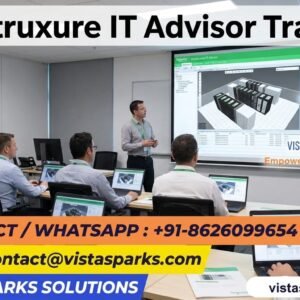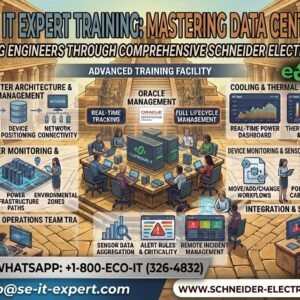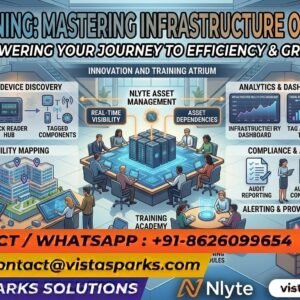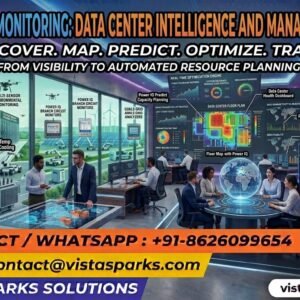
Data Center Infrastructure Management helps organizations monitor and manage data center resources, equipment, environmental conditions, and operational performance. DCIM tools can support infrastructure visibility, alert monitoring, asset tracking, reporting, and capacity-related decisions.
SmartZone DCIM Training can be structured around the relevant product features and your learning objectives, covering:
• 📊 DCIM fundamentals and platform overview
• 🖥️ Data center infrastructure and asset management
• 📡 Infrastructure monitoring concepts
• ⚡ Power and energy monitoring fundamentals
• 🌡️ Environmental monitoring concepts
• 🚨 Alerts, events, and operational response
• 📈 Reporting and performance analysis
• 🔗 Integration and data communication concepts
• 🛠️ Administration and troubleshooting fundamentals
• 📐 Capacity planning and resource optimization
Note: The exact SmartZone product, version, features, and syllabus should be confirmed with Vistasparks Solutions before enrollment.
• Understanding Data Center Infrastructure Management
• Importance of DCIM in modern IT environments
• Common data center operational challenges
• Overview of IT infrastructure and facility systems
• Benefits of centralized infrastructure visibility
• Introduction to DCIM use cases
• Overview of servers, storage, and networking equipment
• Introduction to racks and infrastructure components
• Power distribution and cooling fundamentals
• Environmental monitoring concepts
• Understanding infrastructure dependencies
• Asset identification and classification
• Data center operational best practices
• Introduction to the selected SmartZone DCIM product
• Understanding platform architecture and components
• Overview of the user interface
• Understanding available dashboards and views
• Introduction to platform workflows
• Reviewing product features based on the selected version
• Understanding system requirements and access
• Navigating the platform interface
• Understanding dashboard layouts and status indicators
• Reviewing infrastructure information
• Interpreting monitoring data
• Understanding available filters and search options
• Reviewing infrastructure health summaries
• Using visual information to support operational decisions
• Introduction to data center asset management
• Understanding asset inventories and records
• Categorizing IT and infrastructure components
• Reviewing asset status and lifecycle information
• Understanding relationships between assets
• Maintaining accurate infrastructure information
• Introduction to resource utilization tracking
• Fundamentals of infrastructure monitoring
• Understanding monitored devices and data sources
• Reviewing equipment status and health information
• Introduction to monitoring protocols and communication
• Understanding monitoring intervals and collected data
• Identifying abnormal operating conditions
• Reviewing monitoring trends and status changes
• Introduction to data center power systems
• Understanding power monitoring concepts
• Overview of energy consumption and utilization
• Understanding power capacity and load
• Reviewing available power-related measurements
• Identifying potential power-related risks
• Introduction to energy efficiency concepts
• Introduction to environmental monitoring
• Temperature and humidity fundamentals
• Understanding environmental sensors and data sources
• Reviewing environmental status information
• Understanding thresholds and abnormal readings
• Introduction to cooling and airflow concepts
• Identifying environmental risks to equipment
• Introduction to alerts and monitoring events
• Understanding alert conditions and thresholds
• Reviewing event information and status changes
• Identifying critical and warning conditions
• Understanding alert prioritization
• Introduction to incident investigation
• Reviewing event history and available logs
• Understanding escalation and response procedures
• Introduction to DCIM reporting
• Understanding operational dashboards and reports
• Reviewing asset and infrastructure information
• Interpreting monitoring trends
• Understanding resource utilization reports
• Identifying recurring operational issues
• Using reports to support infrastructure decisions
• Introduction to DCIM integrations
• Understanding communication between monitoring systems
• Overview of supported data sources and interfaces
• Introduction to APIs and data exchange concepts
• Understanding information flow between systems
• Integration considerations for IT and facility infrastructure
• Understanding data quality and consistency
• Introduction to platform administration
• Understanding users, roles, and permissions
• Reviewing available configuration settings
• Understanding monitoring configuration concepts
• Introduction to dashboard and report configuration
• Maintaining accurate system information
• Reviewing basic troubleshooting approaches
• Introduction to data center capacity planning
• Understanding space, power, and cooling requirements
• Reviewing infrastructure utilization
• Identifying potential resource constraints
• Understanding capacity trends
• Introduction to infrastructure optimization
• Supporting maintenance and expansion planning
• Understanding resource allocation decisions
• Understanding common monitoring issues
• Reviewing missing or inconsistent monitoring data
• Identifying communication and connectivity problems
• Investigating alerts and abnormal readings
• Understanding diagnostic information and logs
• Following structured troubleshooting procedures
• Maintaining operational documentation
• Applying escalation and reporting best practices
• Reviewing a sample data center monitoring scenario
• Interpreting dashboard information
• Identifying infrastructure status changes
• Reviewing sample alerts and events
• Analyzing sample asset records
• Discussing power and environmental monitoring scenarios
• Preparing a basic operational report
• Reviewing capacity and resource optimization concepts
Practical exercises and product-specific demonstrations depend on the selected SmartZone product, training environment, and agreed course scope.
By completing the relevant training modules, learners can develop an understanding of how to:
• 📘 Explain DCIM concepts and their role in data center operations
• 🖥️ Identify major data center infrastructure components
• 📊 Navigate and interpret available monitoring dashboards
• 🗂️ Understand asset inventories and infrastructure visibility
• 📡 Explain monitoring concepts and data collection
• ⚡ Understand power and energy monitoring fundamentals
• 🌡️ Interpret basic environmental monitoring information
• 🚨 Understand alerts, events, and incident workflows
• 📈 Review operational reports and monitoring trends
• 🔗 Understand integration and data communication concepts
• 🛠️ Recognize common monitoring and configuration issues
• 📐 Understand capacity planning and resource optimization
• 📚 Structured Curriculum: Learn DCIM concepts through organized modules.
• 🎯 Goal-Oriented Learning: Align topics with your individual or organizational objectives.
• 🖥️ Product-Focused Topics: Explore relevant features based on the confirmed product and version.
• 🧪 Practical Learning: Use demonstrations and scenario-based exercises where available.
• 📊 Monitoring and Reporting: Understand infrastructure visibility and operational data.
• 🛠️ Troubleshooting Concepts: Learn structured approaches to investigating common issues.
• 👨🏫 Trainer Guidance: Receive guidance according to the agreed training arrangement.
• 🏢 Corporate Learning Support: Discuss team-specific training requirements.
• 📌 Flexible Planning: Confirm available schedules and delivery options before enrollment.
Individual SmartZone DCIM Training is intended for learners who want to develop DCIM knowledge according to their professional responsibilities, technical background, and learning goals.
• 🎯 Learning objectives aligned with your goals
• 📚 Coverage of relevant DCIM fundamentals
• 🖥️ Focus on selected product topics
• 🧪 Practical examples where an appropriate environment is available
• 👨🏫 Guidance and clarification according to the training format
• 🗓️ Scheduling discussions based on availability
• 📈 Structured learning based on the agreed course plan
• 🛠️ Exposure to monitoring, reporting, and troubleshooting concepts
Build foundational knowledge relevant to data center monitoring, infrastructure operations, asset visibility, and DCIM-related responsibilities.
Understand how DCIM concepts relate to operational scenarios through examples and demonstrations where available.
Discuss available schedules and training formats with Vistasparks Solutions before enrollment.
Get clarification on course topics according to the agreed training arrangement.
Develop knowledge that may support progression toward data center operations, infrastructure monitoring, and DCIM support roles.
Learn how monitoring information, alerts, asset records, and reports can contribute to operational decisions.
Vistasparks Solutions can discuss SmartZone DCIM training requirements for organizations that want to develop employee knowledge of data center infrastructure management and monitoring practices.
Corporate training topics can be planned around organizational requirements, subject to trainer and platform availability.
• 🏢 Training aligned with organizational objectives
• 🎯 Topics selected according to team responsibilities
• 📚 Coverage of relevant DCIM concepts and workflows
• 🧪 Scenario-based discussions where appropriate
• 📊 Focus on monitoring, reporting, and infrastructure visibility
• 🛠️ Introduction to troubleshooting and operational best practices
• 🗓️ Scheduling discussions for participating teams
• 📌 Opportunity to align the curriculum with project requirements
Potential audiences include:
• Data center operations teams
• IT infrastructure professionals
• Infrastructure monitoring teams
• Data center facility support teams
• IT operations analysts
• Technical support engineers
• Infrastructure consultants and project teams
💼 Career Opportunities After SmartZone DCIM Training
Depending on your existing experience, technical background, and additional skills, related career paths may include:
• Data Center Operations Analyst
• DCIM Support Specialist
• Infrastructure Monitoring Analyst
• IT Infrastructure Support Engineer
• Data Center Technician
• IT Operations Analyst
• Infrastructure Management Consultant
• Data Center Monitoring Engineer
Career opportunities depend on practical experience, relevant technical skills, and employer requirements. Completing training alone does not guarantee employment or certification.
Please confirm available delivery options with Vistasparks Solutions before enrollment.
• 💻 Online instructor-led training, where available
• 👤 Individual training arrangements, subject to availability
• 🏢 Corporate training arrangements, subject to availability
• 🧪 Practical demonstrations or exercises, depending on platform access
• Confirm the product version, syllabus, duration, software access, training format, and certificate arrangements before enrolling.
•📌 Visit Vistasparks Solutions to explore available training programs and find learning opportunities relevant to your IT infrastructure and professional development goals.
• 🎯For SmartZone DCIM Training enquiries, contact us at contact@vistasparks.com or call +91-8626099654.
Ready to develop your knowledge of SmartZone DCIM and Data Center Infrastructure Management? Contact Vistasparks Solutions to discuss the course syllabus, product version, training format, scheduling, and learning objectives that fit your requirements.
📧 Email: contact@vistasparks.com
📱 Phone: +91-8626099654
🌐 Website: https://vistasparks.com
Build your DCIM knowledge, strengthen your infrastructure understanding, and take the next step in your professional learning journey with Vistasparks Solutions! 🎯
SmartZone DCIM Training introduces learners to Data Center Infrastructure Management (DCIM) concepts, infrastructure monitoring, asset visibility, and data center operational practices.
IT professionals, data center operators, infrastructure engineers, system administrators, technical support professionals, and beginners interested in DCIM technologies can explore this training.
Yes. Beginners can start with DCIM fundamentals, data center components, asset management, and monitoring concepts. Advanced topics may require prior IT or infrastructure experience.
The proposed curriculum may cover DCIM fundamentals, platform navigation, asset management, infrastructure monitoring, power and environmental monitoring, alerts, reporting, integrations, administration, and capacity planning.
Yes. The training can introduce servers, storage systems, networking equipment, racks, power distribution, cooling systems, and environmental monitoring concepts.
The proposed syllabus includes dashboard navigation, infrastructure status monitoring, interpretation of monitoring data, and operational indicators, depending on the selected product and version.
Yes. Relevant topics may include asset inventories, asset classification, infrastructure records, resource relationships, and asset lifecycle management concepts.
The course may introduce power monitoring, energy consumption, resource utilization, power capacity, and energy efficiency concepts. Specific features depend on the confirmed platform.
Yes. The proposed curriculum includes temperature, humidity, environmental thresholds, cooling concepts, and interpreting environmental monitoring information.
Yes. Learners may explore alert conditions, thresholds, event information, alert prioritization, incident investigation, and escalation procedures.
Reporting topics may include infrastructure status reports, monitoring trends, resource utilization information, operational dashboards, and using data to support infrastructure decisions.
Integration concepts may include APIs, data exchange, monitoring data sources, and communication between systems. Specific integrations depend on the selected SmartZone product and agreed syllabus.
Practical demonstrations, exercises, and scenario-based learning may be included depending on the training arrangement and availability of the required product environment.
Basic IT knowledge can be helpful, particularly for infrastructure monitoring and troubleshooting topics. Prerequisites depend on the selected training level.
Corporate training requirements can be discussed with Vistasparks Solutions. Topics may be aligned with team responsibilities and organizational objectives, subject to availability.
Individual training arrangements may be available depending on trainer and scheduling availability. Contact Vistasparks Solutions to discuss your learning goals.
Available delivery formats may include online instructor-led sessions, individual arrangements, or corporate training. Confirm current options before enrolling.
The duration depends on the selected product, module coverage, learner experience, and training format. Contact Vistasparks Solutions for the applicable schedule.
Depending on your existing experience and technical skills, related roles may include Data Center Operations Analyst, DCIM Support Specialist, Infrastructure Monitoring Analyst, IT Infrastructure Support Engineer, and IT Operations Analyst. Training does not guarantee employment.
Certificate availability depends on the specific training arrangement. Confirm certificate details with Vistasparks Solutions before enrollment.
There are no reviews yet. Be the first one to write one.