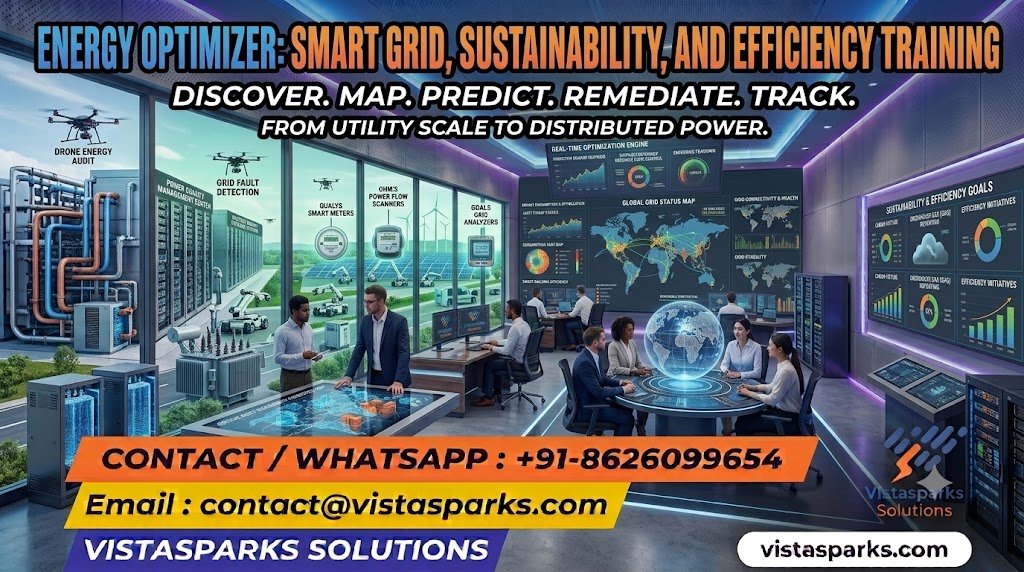
After completing the relevant training modules, learners should be able to:
• Understand the fundamentals of energy optimization and energy management.
• Interpret energy usage data, trends, and performance indicators.
• Understand energy monitoring dashboards and reports, where supported.
• Recognize potential energy inefficiencies and opportunities for improvement.
• Understand optimization recommendations and performance evaluation.
• Apply energy management concepts to practical workplace scenarios.
• Develop a foundation for ongoing energy performance improvement.
• Overview of energy optimization concepts.
• Energy efficiency and resource utilization.
• Common energy management challenges.
• Benefits of monitoring and optimizing energy consumption.
• Energy consumption patterns.
• Energy demand and usage profiles.
• Factors affecting energy performance.
• Introduction to energy performance indicators.
• Introduction to the selected Energy Optimizer product.
• Platform architecture and major components, where applicable.
• User interface and navigation.
• Understanding available features and workflows.
• Monitoring energy usage data.
• Reviewing consumption patterns.
• Understanding historical energy trends.
• Identifying unusual consumption changes.
• Navigating available dashboards.
• Interpreting charts and energy indicators.
• Reviewing consumption summaries.
• Using visual information to support analysis.
• Comparing energy usage across periods.
• Identifying trends and deviations.
• Understanding baselines and performance indicators.
• Evaluating possible causes of inefficient energy use.
• Identifying potential optimization opportunities.
• Understanding operational efficiency measures.
• Reviewing energy-saving recommendations.
• Prioritizing improvements based on operational requirements.
• Understanding alert conditions, where supported.
• Reviewing abnormal usage indicators.
• Interpreting notifications and warnings.
• Following suitable investigation and escalation procedures.
• Reviewing available energy reports.
• Understanding consumption summaries.
• Comparing energy performance indicators.
• Presenting findings to relevant stakeholders.
Module 10: Configuration and Administration
• Introduction to user settings and configuration options.
• Understanding access permissions, where applicable.
• Reviewing measurement parameters and thresholds.
• Following appropriate configuration and data management practices.
• Understanding energy data sources.
• Introduction to metering and monitoring systems.
• Understanding data exchange and integrations, where supported.
• Reviewing data quality and consistency considerations.
• Investigating unexpected energy consumption.
• Reviewing missing or inconsistent data.
• Understanding common monitoring issues.
• Working through energy optimization scenarios.
• Evaluating optimization opportunities.
• Monitoring performance after changes.
• Understanding continuous improvement methods.
• Supporting long-term energy management goals.
The modules above are a proposed learning outline. Final coverage depends on the confirmed Energy Optimizer product, available features, and agreed syllabus.
• Structured introduction to energy optimization concepts.
• Clear explanations of energy monitoring and performance analysis.
• Practical examples and scenario-based learning, where available.
• Coverage of dashboards, reports, and platform workflows, where supported.
• Training scope aligned with learner experience and business objectives.
• Opportunities to discuss real-world energy management challenges.
No specific prerequisite should be assumed without confirming the selected course level. Basic knowledge of energy consumption, electrical systems, facilities operations, or monitoring concepts may be useful. Product-specific training may require familiarity with the relevant platform.
• Build knowledge of energy efficiency and optimization.
• Improve understanding of energy usage data and performance reports.
• Develop analytical skills for identifying potential inefficiencies.
• Learn concepts relevant to energy and facilities management roles.
• Strengthen your foundation for further product-specific learning.
• Improve employee understanding of energy monitoring workflows.
• Support more informed energy performance discussions.
• Build awareness of potential energy-saving opportunities.
• Encourage consistent monitoring and reporting practices.
• Align training with operational efficiency and sustainability objectives.
Knowledge of energy optimization may be relevant to roles such as:
• Energy Management Analyst.
• Energy Efficiency Specialist.
• Facilities Management Engineer.
• Building Operations Engineer.
• Sustainability Analyst.
• Energy Monitoring Specialist.
• Technical Support Engineer.
Career opportunities depend on your existing qualifications, experience, location, and employer requirements. This training alone does not guarantee employment or professional certification.
Contact Vistasparks Solutions to confirm the current training options. Depending on availability, the training may be arranged for individuals or corporate teams, with the syllabus tailored to agreed learning objectives.
Explore these trusted resources to expand your knowledge of energy management, energy efficiency, and optimization practices.
Energy Management Standards: Learn about the ISO 50001 Energy Management Standard, which provides a framework for improving energy performance and managing energy use systematically.
Energy Efficiency Guidance: Visit the U.S. Department of Energy’s Energy Saver resources to explore energy efficiency concepts and practical ways to reduce energy waste.
Energy Management Systems: Explore the U.S. Department of Energy’s Energy Management Programs for information on energy management practices and continuous improvement.
Global Energy Insights: Visit the International Energy Agency (IEA) for energy reports, data, analysis, and information about global energy trends.
These external resources complement Energy Optimizer Training by providing additional context on energy monitoring, performance improvement, and efficient resource management.
Visit Vistasparks Solutions to explore training programs that match your technical and professional development goals.
For Energy Optimizer Training enquiries, contact us at contact@vistasparks.com or call +91-8626099654.
Interested in learning about energy monitoring and optimization? Contact Vistasparks Solutions to discuss the syllabus, product version, training duration, fees, schedule, and delivery options.
• Email: contact@vistasparks.com
• Phone: +91-8626099654
• Website: https://vistasparks.com
Build your understanding of energy optimization with training aligned to your learning and operational goals.
Energy Optimizer Training introduces learners to energy optimization concepts, energy consumption monitoring, performance analysis, reporting, and energy efficiency practices. The exact topics depend on the Energy Optimizer product or platform being used.
The training may be suitable for energy management professionals, electrical engineers, facilities teams, operations professionals, sustainability specialists, technical support teams, and learners interested in energy efficiency.
Yes, the course can be structured to introduce beginners to energy management and optimization fundamentals before progressing to platform-specific topics.
The proposed syllabus includes energy management fundamentals, energy consumption monitoring, dashboards, performance analysis, optimization strategies, alerts, reporting, configuration, integrations, and troubleshooting, where supported by the selected platform.
Prior experience may not be essential for an introductory course. Basic knowledge of energy consumption, electrical systems, facilities operations, or monitoring concepts can be helpful.
The training can cover energy usage data, consumption patterns, historical trends, performance indicators, and methods for identifying unusual changes in energy consumption.
Yes, the proposed course outline includes energy efficiency concepts, identifying potential inefficiencies, evaluating optimization opportunities, and understanding energy-saving strategies.
Where the selected product supports these features, learners can explore dashboards, charts, consumption summaries, performance indicators, and energy reports.
Practical examples, demonstrations, and scenario-based exercises may be included depending on the course arrangement, platform access, and availability of a suitable training environment.
The course may cover consumption comparisons, historical trends, energy baselines, performance indicators, and ways to investigate potential causes of inefficient energy use.
Alert management may be included where supported by the platform. Topics can include interpreting warnings, investigating unusual consumption, and following appropriate escalation procedures.
The training may introduce energy data sources, metering systems, monitoring tools, and integration concepts. Specific integrations depend on the selected Energy Optimizer product and its capabilities.
The course can help learners understand energy monitoring and optimization methods that support better-informed operational decisions. Actual energy savings depend on the equipment, processes, implementation, and operational conditions.
The duration depends on the syllabus, course level, product version, and training format. Contact Vistasparks Solutions to confirm the available duration and schedule.
Corporate training requirements can be discussed with Vistasparks Solutions. The syllabus may be aligned with team responsibilities and organizational learning objectives, subject to availability.
Individual training arrangements may be available depending on scheduling and trainer availability. Contact Vistasparks Solutions to discuss your learning requirements
Online instructor-led, individual, corporate, or demonstration-based options may be available. Please confirm the current delivery formats with Vistasparks Solutions.
Related career paths may include energy management, energy efficiency, facilities operations, sustainability analysis, building operations, and energy monitoring. Career opportunities depend on your qualifications, experience, and employer requirements.
Certificate availability and the type of certificate depend on the training arrangement. Please confirm the certification or course-completion policy with Vistasparks Solutions before enrolling.
To enquire about the syllabus, product version, fees, duration, schedule, and available training formats, contact Vistasparks Solutions.
Email: contact@vistasparks.com
Phone: +91-8626099654
Website: https://vistasparks.com
The team can discuss your learning goals and help you understand the available training options.
There are no reviews yet. Be the first one to write one.